
Stellaris: The Space Strategy Game That Lets You Write Your Own Galactic Epic
Picture this: you're floating in the vast emptiness of space, commander of your own interstellar civilization, and every decision you make could mean the difference between galactic domination or total annihilation. That's the magic Paradox Interactive captured when they launched Stellaris back in May 2016. Unlike most strategy games that railroad you down a predetermined path, this one hands you the keys to an entire galaxy and says, 'Go wild.'
Your Empire, Your Rules—But Make Them Good Ones
Right from the jump, Stellaris throws you into the deep end of empire creation. You're not just picking a faction from a dropdown menu; you're literally architecting an entire civilization from scratch. Want to play as peace-loving mushroom people? Go for it. Prefer genocidal robots hell-bent on exterminating organic life? That's totally an option too. The game offers everything from classic humanoids to reptilian species, sentient machines, and even living planets that somehow figured out space travel.
But here's where it gets interesting—your choices actually matter. You're defining your empire's ethics (pacifist, militarist, xenophobic, egalitarian, you name it) and governmental structure. Democracy? Oligarchy? Full-blown space dictatorship? Creepy hive mind where everyone shares one consciousness? Each combination fundamentally reshapes how you'll play. This wasn't just some superficial RPG element tacked onto a strategy game; Paradox went all-in on making your civilization feel genuinely unique.
The Early Game: When Everything's New and Terrifying
You start small—one home planet, a handful of ships, and a whole lot of cosmic real estate to explore. Your first mission is pretty straightforward: send out science vessels to survey nearby star systems, find habitable planets, and pray you don't immediately run into hostile neighbors. You'll be building mining stations around resource-rich asteroids, constructing facilities on your colonies, and generally trying to not let your fledgling empire collapse under its own weight.
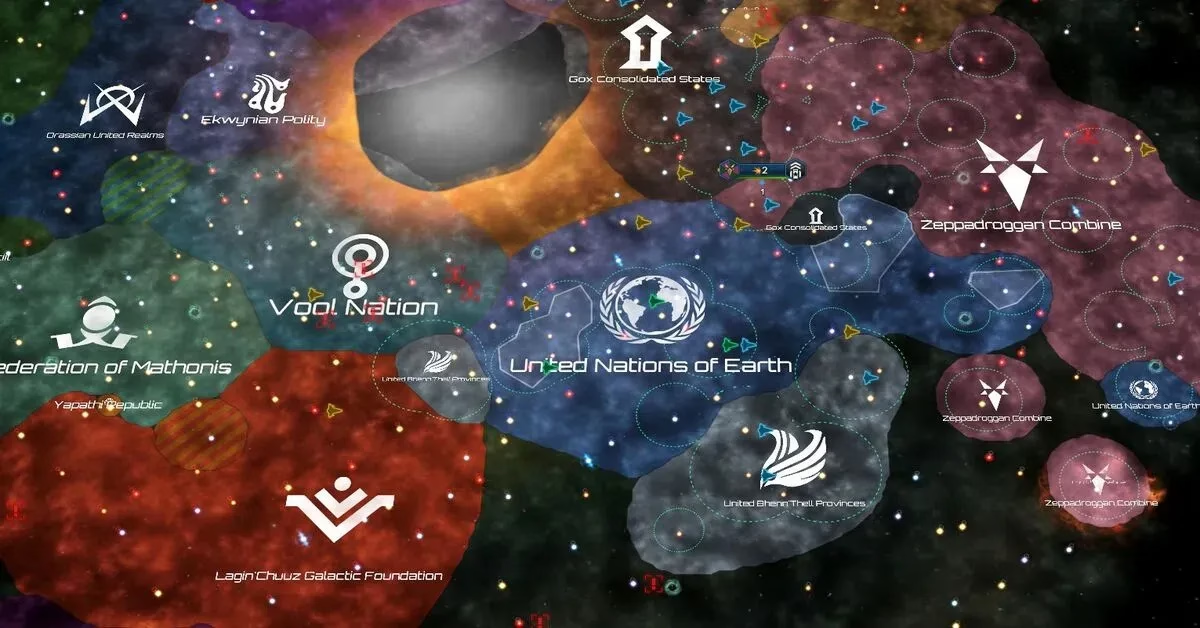
The exploration phase is genuinely captivating. Your scientists will stumble upon ancient ruins, investigate weird signals, and encounter random events that can spiral into full-blown narrative arcs. Maybe you'll discover an abandoned megastructure. Perhaps you'll accidentally awaken something that should've stayed asleep. The procedural event system ensures you're constantly on your toes, wondering what fresh chaos the universe will throw at you next.
The 4X Formula: Explore, Expand, Exploit, Exterminate (In That Order, Usually)
Stellaris follows the classic 4X strategy blueprint, but with its own flavor. First, you're exploring the galaxy, mapping out systems and cataloging resources. Then comes expansion—establishing colonies on promising worlds and claiming territory before your rivals do. Exploitation means managing a complex web of resources: energy credits, minerals, research output, influence, alloys, consumer goods, and probably a few things I'm forgetting. Finally, there's extermination—or diplomacy, if you're feeling merciful—where you either conquer your neighbors or negotiate your way to dominance.
Unlike traditional turn-based strategy games, everything happens in real-time here. But don't panic—you can pause whenever things get overwhelming, which they absolutely will. The economic decisions you make early on can haunt you hundreds of years later. Built too many research labs? Congrats, your economy just tanked. Ignored fleet construction? Hope you like getting invaded.
When Things Get Weird: Dragons, Crises, and Galactic Chaos
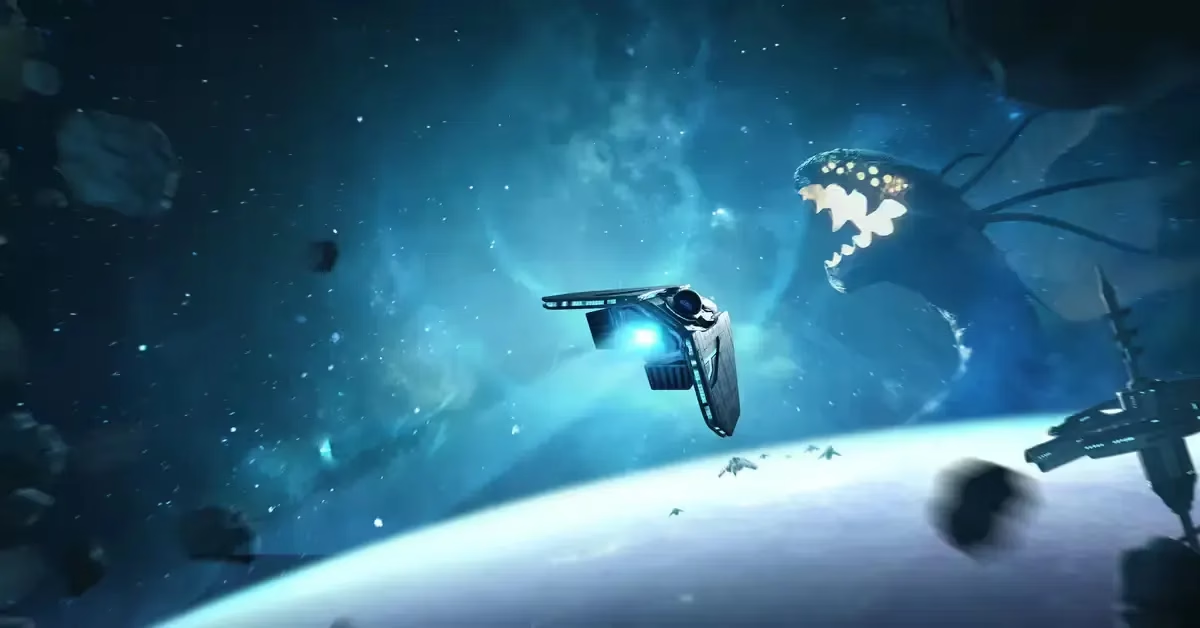
The real genius of Stellaris lies in its dynamic event system. Instead of following a scripted campaign, bizarre and often catastrophic events emerge organically throughout your playthrough. You might encounter enormous space dragons capable of vaporizing planets. Dimensional rifts could tear open, unleashing extradimensional horrors. Fallen Empires—ancient, overwhelmingly powerful civilizations that have been chilling for millennia—might suddenly decide you're annoying and need to be eliminated.
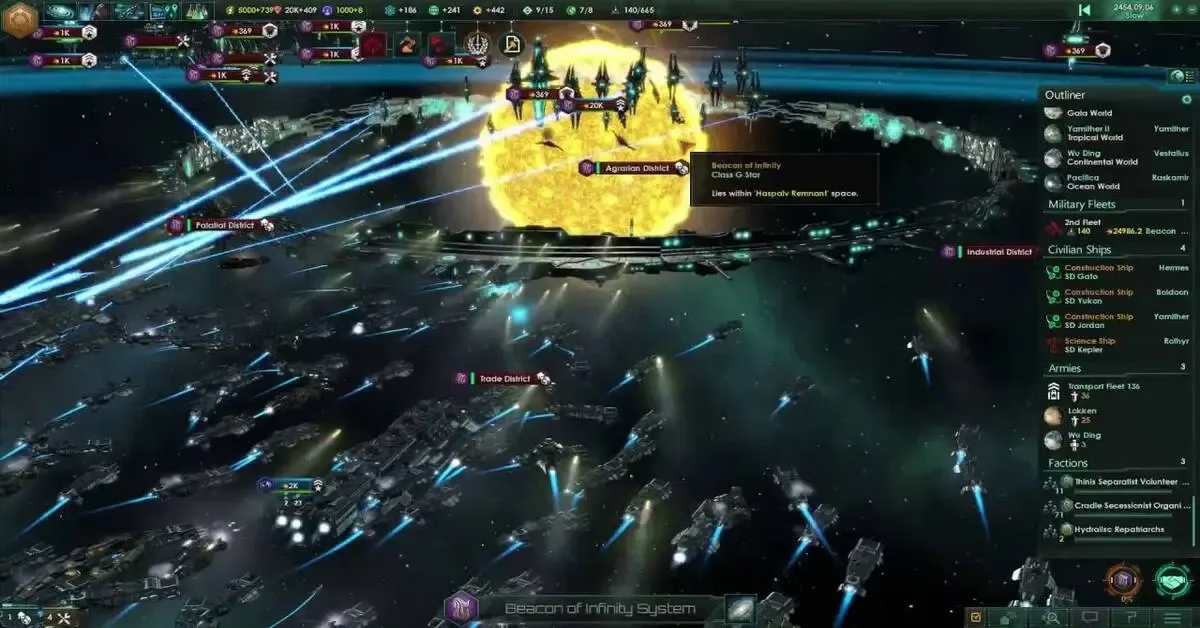
Towards the mid-to-late game, a galaxy-wide crisis inevitably erupts. Could be a ravenous swarm determined to devour all biological matter. Might be rogue AI that decided organics are obsolete. Whatever it is, defending against these apocalyptic scenarios often requires bitter enemies to temporarily team up. These end-game crises represent the climax of most playthroughs, though you're free to keep playing indefinitely if you want to see how your empire develops in peacetime.
The DLC Situation: A Double-Edged Sword
Since 2016, Paradox has been continuously expanding Stellaris through a steady stream of DLCs and free updates. Currently, there are 32 DLCs available, ranging from minor cosmetic packs to massive expansions that fundamentally alter gameplay. On one hand, this long-term support keeps the game fresh and constantly evolving. On the other hand... that's a lot of DLC, and buying everything can easily cost more than a brand-new AAA title.
Let's highlight a few major expansions:
-
Utopia (2017): Introduced megastructures like Ring Worlds and Dyson Spheres. Imagine building a massive ring around a star that provides living space for billions, or constructing a sphere that harvests the entire energy output of a sun. Yeah, it's as cool as it sounds.
-
Apocalypse (2018): Added Titans (massive warships) and Colossi (planet-destroying superweapons). Because sometimes diplomacy fails and you need to make a statement by obliterating someone's homeworld.
-
Federations (2020): Massively expanded diplomacy with a galactic senate and complex alliance systems. Suddenly, you're not just managing your empire but navigating interstellar politics and trying to pass resolutions that benefit you while screwing over your rivals.
Beyond the paid content, free updates have repeatedly overhauled core systems. The economic model has been reworked multiple times. The population (Pop) system now plays a crucial role in planetary stability and production. Planet management evolved from simple administration to strategic placement of districts and buildings. All these improvements arrived at no additional cost.
Paradox offers a subscription model for those who find purchasing 32 DLCs overwhelming. For a monthly fee, you can access all expansions, which honestly isn't a bad deal if you want the complete experience without the sticker shock.
Genre-Defining Impact: How Stellaris Changed Strategy Gaming
Stellaris didn't just create a successful game; it fundamentally influenced the entire sci-fi strategy genre. Its emphasis on emergent storytelling—where narratives arise naturally from gameplay rather than scripted events—became a blueprint for future titles. The event system specifically revolutionized how developers approach narrative in strategy games.
The game demonstrated that players could invest hundreds of hours into procedurally generated galaxies rather than historical maps with predetermined outcomes. Decisions that carry genuine narrative weight became the standard, not the exception. Sci-fi grand strategy experienced a renaissance, with developers realizing there was massive demand for complex, sandbox-style space games.
A Decade Later: Still Going Strong
Ten years after launch, Stellaris maintains over 40,000 daily concurrent players. Paradox continues releasing major updates, new DLCs, and balance patches. But the secret to the game's incredible longevity might be its modding community. Players have created custom species, unique story chains, and total conversion mods featuring entirely new universes or beloved sci-fi franchises.
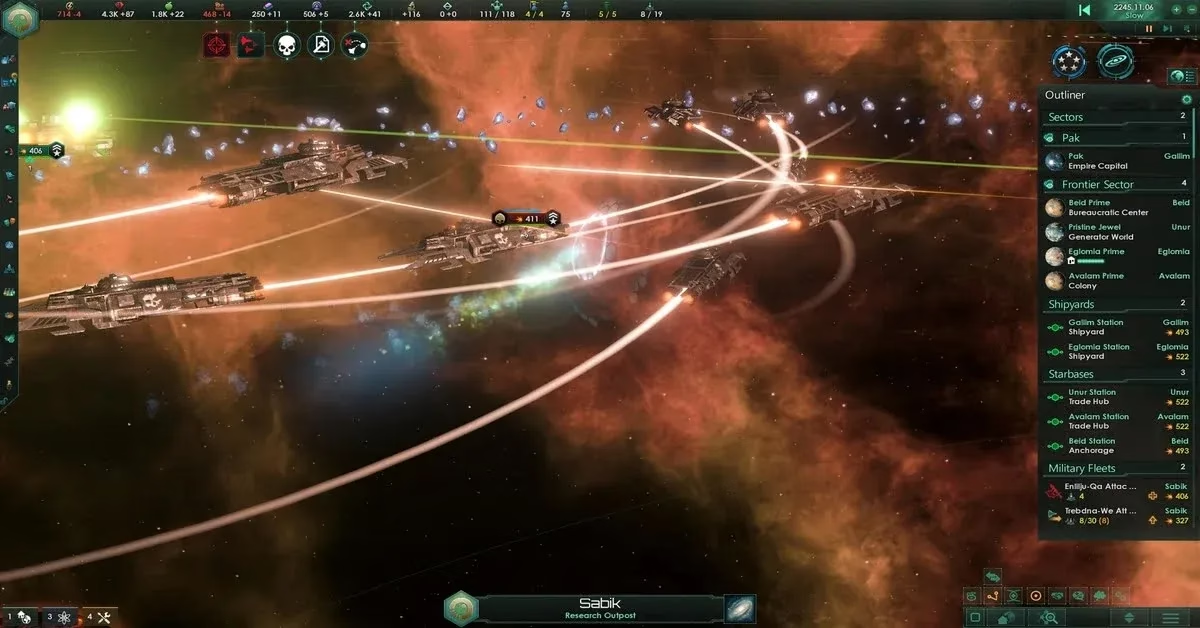
Want to play in the Star Trek universe? There's a mod for that. Prefer Star Wars? Covered. Feel like experiencing Warhammer 40K in grand strategy format? Someone's got you. These mods can easily add thousands of additional gameplay hours.
Paradox is notorious for supporting their games long-term. More DLCs and updates are almost certainly coming, potentially addressing performance issues in the late game (which can definitely drag on older systems). Diplomacy, internal politics, and faction mechanics will likely see further refinement. New story elements and end-game crises are practically guaranteed.
As for Stellaris 2? Don't hold your breath. Paradox hasn't announced a sequel, and given their development patterns, you shouldn't expect one before 2031 at the earliest. They'd rather keep improving the current game than start from scratch.
The Verdict: Not Just a Game, But a Story Generator
Stellaris exemplifies how a game can captivate players not through predetermined scripts but through absolute freedom. Every playthrough develops differently. Every decision cascades into unexpected consequences. From this framework emerge unforgettable, player-driven narratives that no developer could script.
The sophisticated blend of 4X strategy, RPG elements, and dynamic events ensures Stellaris feels fresh even after hundreds of hours. Yes, the DLC model is expensive and somewhat predatory. Yes, the learning curve is steep enough to intimidate newcomers. But despite these legitimate criticisms, the game has evolved into a genuine titan of the strategy genre.
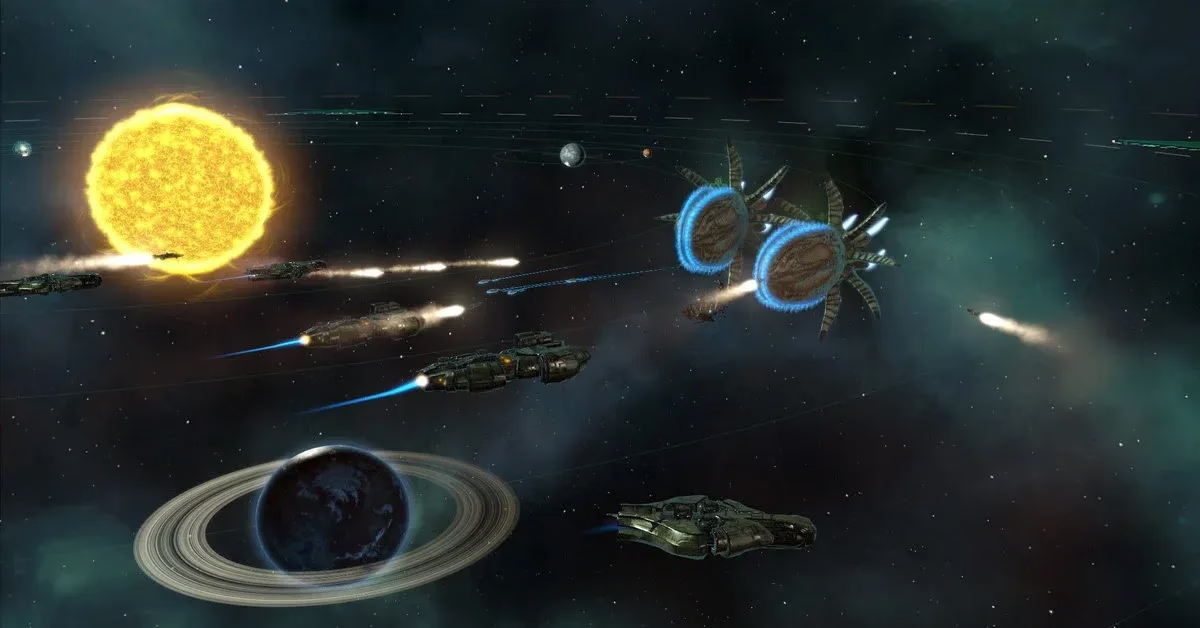
Thanks to continuous developer support, an incredibly active modding community, and Paradox's clear long-term vision, Stellaris will remain relevant for years to come. If you're willing to invest the time and mental energy, you won't find a simple game here. Instead, you'll discover an expansive sandbox where you forge your very own sci-fi saga—complete with triumphs, disasters, and those 'what just happened?' moments that make strategy gaming so addictive. And honestly? That's exactly what makes Stellaris an absolute masterpiece worth experiencing in 2026 and beyond.
