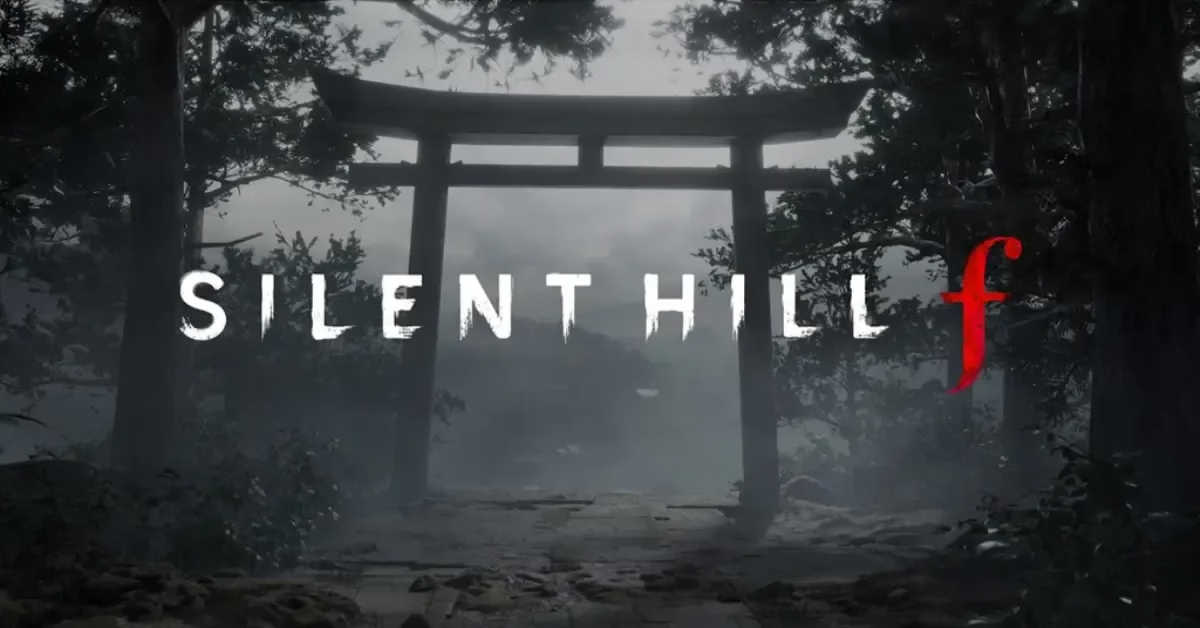
Silent Hill f: The Brutal Survival Horror That Earned Steam's Toughest Award Nomination
Konami has unleashed a paradigm-shifting experience with Silent Hill f, a game that abandons the franchise's traditional atmospheric wandering in favor of ruthless, mechanically demanding survival gameplay. This latest installment has rapidly become one of 2026's most polarizing titles, earning widespread recognition for its uncompromising difficulty curve and securing a nomination for Steam's prestigious "Best Game You Suck At" Award.
🎮 A Radical Departure From Franchise Tradition
The evolution of Silent Hill f represents a seismic shift from the psychological horror foundations that defined the series. Where previous entries prioritized mood, symbolism, and narrative ambiguity, this new chapter demands technical mastery and split-second decision-making. The game transforms the fog-shrouded town into an arena of constant threat, where survival depends on precision rather than exploration.
This transformation positions the title as an unexpected rival to action-focused dungeon crawlers, though it eschews the loot-driven progression systems that define competitors. Instead, Silent Hill f challenges players through pure mechanical difficulty, creating a hardcore survival experience wrapped in the franchise's signature oppressive atmosphere. The game's design philosophy emphasizes consequence over comfort, making every encounter a potentially fatal test of skill.
The community response has been immediate and passionate. Veterans of challenging games have rallied around Silent Hill f, recognizing it as a legitimate contender for the most demanding single-player experience available. The nomination for the "Best Game You Suck At" category reflects the game's ability to simultaneously frustrate and captivate players, creating a masochistic loop that keeps them returning despite repeated failures.
⚠️ The "Lost in the Fog" Difficulty: A Masterclass in Punishment
At the heart of Silent Hill f's notorious challenge lies the "Lost in the Fog" difficulty setting, a mode that strips away safety nets and forces players to engage with the game's systems at their most unforgiving level. This configuration introduces several interconnected mechanics that compound the difficulty:
Resource Scarcity and Strategic Management
-
Health items are distributed sparingly throughout environments
-
Ammunition counts require careful consideration before each combat encounter
-
Save points become precious commodities, forcing players to calculate risk versus progress
-
Inventory space limitations demand constant prioritization decisions
Adaptive Enemy Intelligence
The hostile entities inhabiting the fog-drenched streets demonstrate sophisticated behavioral patterns that respond directly to player tactics. Repeated use of specific strategies triggers countermeasures, forcing continuous adaptation. Enemies learn camping spots, exploit predictable movement patterns, and coordinate attacks when players demonstrate consistent approaches.
This adaptive AI system creates a dynamic challenge that evolves throughout playthroughs. Players cannot rely on memorized routes or safe strategies; the game actively punishes complacency. This design choice elevates tension beyond simple difficulty spikes, creating genuine uncertainty in every encounter.
Unforgiving Checkpoint System
Perhaps the most controversial aspect of "Lost in the Fog" mode is its punishing checkpoint distribution. A single critical error—mistimed dodge, misallocated resource, or navigation mistake—results in chapter-wide progress loss. This extreme consequence transforms the game into an endurance test where concentration lapses carry devastating penalties.
The psychological impact of this system cannot be overstated. Players report experiencing genuine anxiety during extended sequences, knowing that hours of progress hang on maintaining perfect execution. This design mirrors the philosophy of classic arcade games and modern roguelikes, where failure state immediacy creates heightened investment.
📖 Narrative Excellence Behind the Difficulty Wall
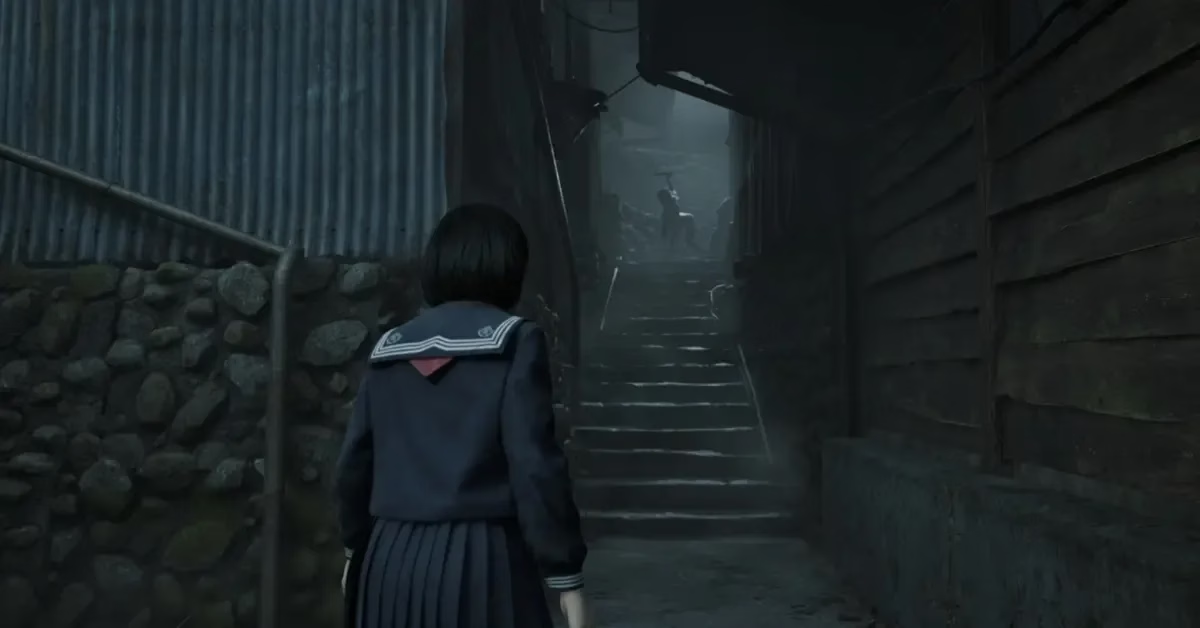
Ryukishi07's contribution to Silent Hill f deserves particular recognition. The acclaimed writer, known for intricate mystery narratives and psychological complexity, has crafted a script that operates on multiple thematic levels. The story explores trauma, cultural identity, and existential dread through carefully constructed character arcs and symbolic imagery.
However, this narrative brilliance exists behind a formidable gameplay barrier. Only players capable of surviving the mechanical challenges gain access to the full story experience. This creates an unusual dynamic where the game's artistic achievements remain locked behind skill gates, effectively limiting the audience for Ryukishi07's work to those with sufficient dedication and ability.
The narrative structure interweaves with gameplay systems in meaningful ways. Story revelations often coincide with difficulty escalations, creating thematic resonance between narrative beats and mechanical challenges. This integration ensures that the harsh gameplay serves the storytelling, rather than existing as separate elements competing for attention.
💰 The Economic Reality: Editions, Pricing, and Value Propositions
Silent Hill f's commercial strategy has generated significant controversy within the gaming community. The game launches with multiple editions featuring stark content and price disparities:
Standard Edition vs. Deluxe Edition
The base package provides the complete core experience, including access to all difficulty settings and the full narrative campaign. However, Konami has positioned the Deluxe Edition at an $80 price point, marketing it with "Founder's Pack" language typically associated with free-to-play titles or ongoing service games.
This premium tier includes:
-
Exclusive cosmetic costumes, including the distinctive Pink Rabbit outfit
-
Early access windows for new content updates
-
Digital artbook and soundtrack collections
-
Priority access to potential future DLC content
The Deluxe Edition's pricing strategy has drawn criticism for applying monetization models more commonly seen in multiplayer games to a single-player horror experience. Critics argue that locking cosmetic content behind substantial paywalls undermines the horror atmosphere and creates artificial scarcity for digital goods.
Third-Party Key Market Dynamics
Savvy consumers have discovered significant savings through authorized key resellers, who offer the Standard Edition at substantially reduced prices compared to official retail channels. These legitimate marketplaces provide access to the complete "Lost in the Fog" experience without the premium edition's digital extras.
The price differential between official retail and key markets often reaches 30-40%, representing substantial savings that can fund additional game purchases. For players primarily interested in the core gameplay challenge rather than supplementary digital content, this purchasing path offers optimal value.
This pricing ecosystem creates a two-tier consumer base: those willing to pay premium prices for complete cosmetic collections, and budget-conscious players who prioritize mechanical challenge over aesthetic customization. Both groups access identical gameplay experiences, with differences limited to visual presentation options.
🏆 Accessibility Options and Difficulty Spectrum
Despite its reputation for punishing difficulty, Silent Hill f incorporates comprehensive accessibility features and difficulty gradations:
Easy Mode: Cinematic Experience
This configuration prioritizes narrative progression and atmospheric immersion over mechanical challenge. Combat encounters are simplified, resources are plentiful, and checkpoint distribution is generous. Easy mode serves players interested in Ryukishi07's storytelling without the hardcore survival mechanics.
Normal Mode: Balanced Challenge
The default difficulty setting provides moderate resource scarcity and competent enemy AI while maintaining reasonable checkpoint frequency. This mode accommodates players seeking challenge without the extreme consequences of higher difficulties.
Hard Mode: Veteran Challenge
Elevated difficulty that introduces stricter resource management and enhanced enemy capabilities while maintaining traditional checkpoint systems. This tier appeals to experienced survival horror players seeking substantial challenge without "Lost in the Fog" extremes.
Lost in the Fog: Ultimate Test
The previously discussed mode that has driven the game's reputation for uncompromising difficulty and earned its Steam Award nomination.
This spectrum ensures that Silent Hill f can accommodate diverse skill levels and play preferences while maintaining its hardcore identity through the optional extreme difficulty settings.
🌟 Community Reception and Cultural Impact
The gaming community's response to Silent Hill f has been intensely divided, with passionate advocates and vocal critics creating vibrant discourse:
Supporters emphasize:
-
Refreshing challenge in an era of accessibility-focused design
-
Meaningful consequences that elevate tension and investment
-
Reward satisfaction from overcoming genuinely difficult obstacles
-
Narrative depth that justifies the mechanical demands
Critics highlight:
-
Artificial difficulty through frustrating checkpointing rather than fair challenge
-
Narrative content locked behind skill barriers excludes interested audiences
-
Aggressive monetization undermines horror atmosphere
-
Difficulty spikes that feel unbalanced rather than carefully tuned
Streaming platforms and video content have become alternative consumption methods for players unable or unwilling to engage with the mechanical challenges directly. This has created a secondary audience experiencing the game vicariously, appreciating the narrative and atmosphere without personal frustration from the difficulty systems.
🔥 The Verdict: Who Should Enter the Fog?
Silent Hill f represents a bold, controversial evolution for the franchise that will resonate powerfully with specific player profiles while alienating others:
Ideal for players who:
-
Thrive on overcoming punishing challenges
-
Appreciate adaptive difficulty systems that resist exploitation
-
Value consequence-driven gameplay that punishes mistakes severely
-
Seek bragging rights from conquering notoriously difficult games
-
Want sophisticated narratives but possess the skill to access them
Less suitable for players who:
-
Prefer exploration and atmosphere over mechanical precision
-
Have limited time for repeated attempts at difficult sequences
-
Prioritize narrative accessibility over challenge-based gatekeeping
-
Expect traditional Silent Hill psychological horror pacing
-
Find frustration-inducing difficulty more tedious than engaging
The game's positioning as a 2026 frontrunner for "Best Game You Suck At" recognition perfectly encapsulates its identity: a brilliantly crafted, mechanically demanding survival horror experience that simultaneously rewards and punishes players in equal measure. The question isn't whether Silent Hill f is good—the craftsmanship is undeniable—but whether players possess the dedication to experience its full potential.
For those willing to embrace the challenge, particularly at the reduced prices available through key marketplaces, Silent Hill f offers one of the most rewarding horror experiences available. The fog awaits, patient and indifferent, ready to consume those unprepared for its trials while revealing profound secrets to those who persevere. 🌫️
