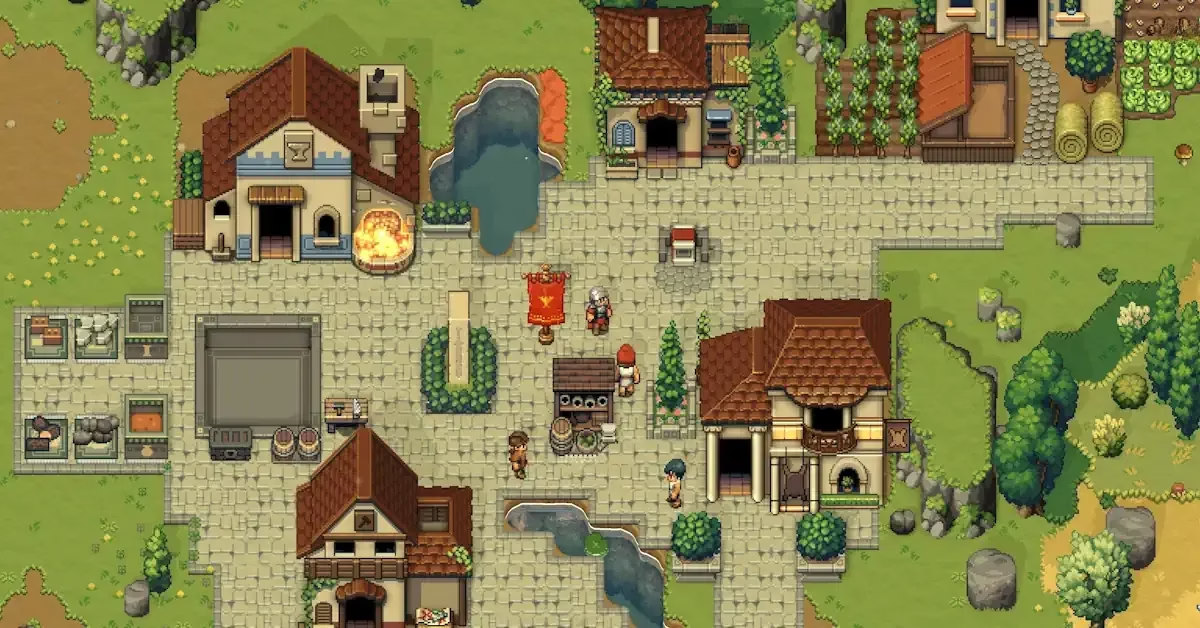
Romestead: The Roman Farming Sim Challenging Stardew Valley's Throne
The indie gaming landscape has witnessed the emergence of a compelling new title that seeks to redefine the farming simulation genre. Romestead, a game that ingeniously merges pastoral farming mechanics with survival elements and Roman city-building, has captured the attention of genre enthusiasts. What makes this particularly noteworthy is that aspiring players can experience the game at no cost through its current playtest phase.
The Shadow of Stardew Valley
When ConcernedApe unveiled Stardew Valley to the gaming world, the impact transcended mere commercial success. The game essentially established the blueprint for what modern farming simulators could achieve. Nearly ten years have passed since that pivotal release, yet independent developers continue their pursuit of that delicate equilibrium between comfort and engagement that made Stardew Valley a cultural phenomenon. Romestead represents the latest attempt to capture this magic while introducing distinctive elements that set it apart from its predecessors.
The game distinguishes itself through an ambitious fusion of mechanics. Players assume the role of a Roman citizen tasked with the monumental challenge of reconstructing a civilization that has fallen into ruin. This premise alone differentiates Romestead from the typically peaceful farming experiences that dominate the genre.
A Harder Edge to Cozy Gaming
For players who have longed for a farming simulation with more substantial challenges, Romestead delivers on multiple fronts. The game eschews the purely relaxing atmosphere that characterizes many titles in the genre, instead incorporating elements that demand strategic thinking and careful planning. Resource management becomes a critical component of success, as players must navigate scarcity while simultaneously developing their settlements.
Key Features:
🏛️ Roman City-Building - Reconstruct ancient civilization from ruins
🌾 Advanced Farming Systems - Manage crops while dealing with resource constraints
⚔️ Survival Mechanics - Face environmental dangers and hostile forces
🎨 Pixel-Art Aesthetics - Nostalgic visual style with modern depth
🎮 Strategic Gameplay - Balance multiple systems simultaneously
The incorporation of survival mechanics adds layers of complexity absent from traditional farming simulations. Wild nature presents constant threats, resources remain perpetually scarce, and adversaries emerge to test player resilience. This creates a gaming experience that oscillates between moments of tranquil agricultural development and intense strategic decision-making. The pixel-art presentation provides nostalgic appeal while the underlying systems offer sophisticated depth that rewards careful planning.
Development and Accessibility
Despite remaining in pre-release status, Romestead has already opened its doors to the gaming community. Developer Beartwigs has implemented a free playtest program accessible through Steam, demonstrating confidence in their product while actively seeking player feedback. This approach reflects modern indie development practices, where community involvement shapes the final product.
Beartwigs brings considerable technical expertise to the project, having developed their proprietary Candide Engine specifically for this endeavor. This custom-built foundation enables the team to implement unique features and maintain precise control over the gaming experience. The studio has outlined an ambitious timeline, targeting a comprehensive release in late 2025.
Development Timeline:
| Phase | Status | Details |
|---|---|---|
| Showcase | Completed | Presented at Gamescom 2025 |
| Playtest | Active | Free access via Steam |
| Refinement | Ongoing | Controller support, balance adjustments |
| Release | Planned | Late 2025 target date |
Following the game's showcase at Gamescom 2025, the development team has concentrated efforts on refining multiple aspects of the experience. Controller support has received particular attention, recognizing that many players prefer this input method for relaxed gaming sessions. Balance adjustments continue based on playtest feedback, ensuring that the survival elements enhance rather than frustrate the core experience. Performance optimization remains an ongoing priority as the team works toward delivering a smooth experience across various hardware configurations.
How to Join the Experience
Participating in the Romestead playtest requires minimal effort from interested players. The process begins with visiting the game's Steam page and submitting a request for playtest access. Once approved, players can immediately begin exploring what the game offers. Currently, the playtest operates exclusively in English, though multilingual support may expand as development progresses.
This accessibility demonstrates the developers' commitment to iterative improvement through community engagement. Player feedback during this phase directly influences design decisions, potentially shaping the final product in meaningful ways.
Finding Its Niche
Romestead appears positioned to occupy a unique space within the farming simulation ecosystem. The game draws comparisons to both Stardew Valley and Valheim, suggesting it might bridge the gap between pure farming sims and survival-focused experiences. This hybrid approach could appeal to players seeking more challenge than traditional farming games provide while maintaining the cozy aesthetic that defines the genre.
The combination of agricultural mechanics, survival elements, and exploration creates a multifaceted experience. Players must cultivate crops to sustain their settlements while simultaneously defending against threats and expanding their territorial influence. This interconnected system design ensures that success requires attention to multiple aspects of gameplay rather than focusing solely on farming or building.
What Sets Romestead Apart:
✨ Historical Setting - Roman civilization provides unique thematic framework
💪 Difficulty Options - Caters to players seeking genuine challenge
🔄 Interconnected Systems - Farming, building, and survival mechanics influence each other
🎯 Strategic Depth - Requires long-term planning and resource allocation
🌍 Exploration Focus - Encourages discovery beyond the farm boundaries
The Broader Context
The timing of Romestead's emergence proves interesting within the broader indie gaming landscape. As established titles like Stardew Valley continue receiving updates and maintaining devoted player bases, new entries must offer compelling reasons for players to divide their attention. Romestead's approach suggests that innovation within familiar frameworks remains viable, provided the execution demonstrates quality and originality.
The game represents broader trends in independent development, where small teams leverage specialized engines and community feedback to create experiences that challenge industry conventions. The free playtest model reduces barriers to entry while generating valuable data that informs ongoing development. This symbiotic relationship between developers and players increasingly characterizes successful indie projects.
Technical Foundation
The decision to build Romestead using a custom engine deserves particular attention. While many indie developers rely on established platforms like Unity or Unreal Engine, Beartwigs opted to create their own technological foundation. This approach demands significantly more development time and expertise but provides unparalleled control over the final product. The Candide Engine enables the team to implement precise mechanics and optimize performance in ways that off-the-shelf solutions might not accommodate.
This technical investment suggests long-term ambitions beyond Romestead itself. A proprietary engine can support future projects, creating efficiency gains that compound over time. For players, this translates to a gaming experience carefully tailored to the developers' specific vision rather than constrained by pre-existing architectural decisions.
Community Reception and Anticipation
Early reactions to Romestead indicate substantial interest from the farming simulation community. The combination of familiar mechanics with novel twists appears to resonate with players seeking fresh experiences within a beloved genre. Social media discussions reveal particular excitement about the survival elements and Roman setting, suggesting these differentiating features successfully capture imagination.
The gaming community's response to the playtest opportunity has been enthusiastic, with many players eager to contribute feedback during the development process. This engagement bodes well for the game's eventual release, as committed players often become evangelists who spread awareness through word-of-mouth recommendations.
Looking Forward
As Romestead progresses toward its anticipated late-2025 release, the gaming community watches with considerable interest. Whether the game ultimately achieves the cultural impact of Stardew Valley remains uncertain, but its unique approach and evident quality suggest it will find an appreciative audience. The free playtest provides an excellent opportunity for curious players to experience the game firsthand and contribute to its ongoing evolution.
The question of whether Romestead represents the next major advancement in farming simulation games will be answered in time. What seems clear is that the genre continues evolving, with developers like Beartwigs pushing boundaries while respecting the foundational elements that made games like Stardew Valley beloved. For players seeking new agricultural adventures with added complexity and challenge, Romestead merits serious consideration.
The game's development trajectory exemplifies how modern indie studios can leverage community engagement, technical expertise, and creative vision to create experiences that stand alongside genre-defining predecessors. Whether rebuilding Roman civilization while tending crops appeals to individual players depends on personal preferences, but the opportunity to explore this unique fusion exists freely for those willing to request playtest access.
