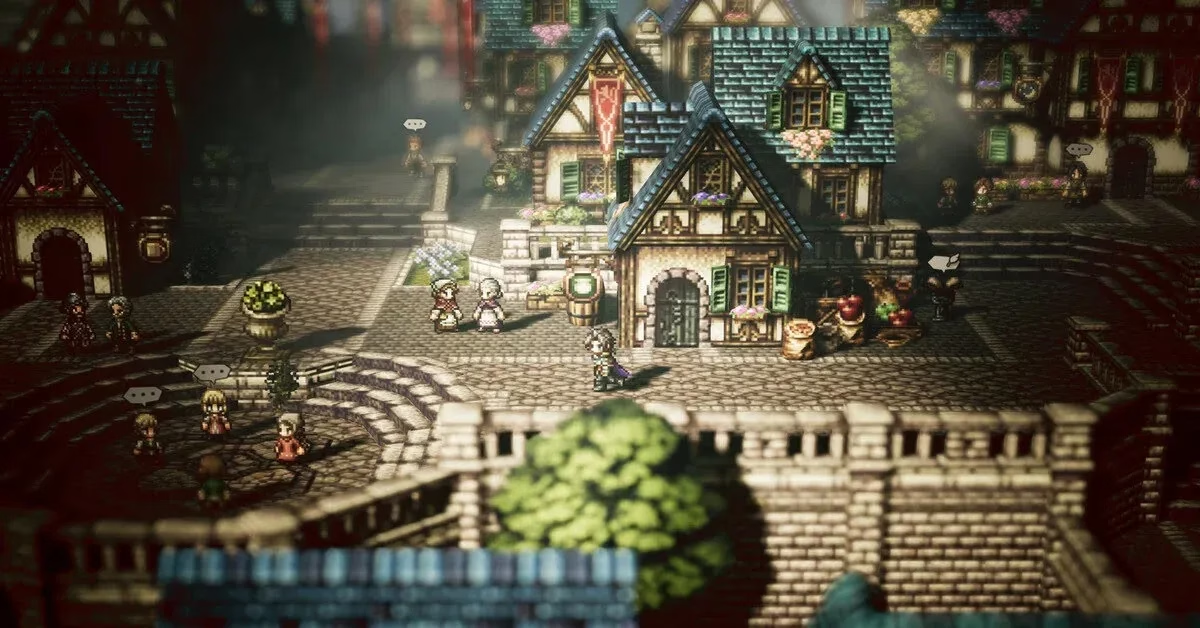
Octopath Traveler: A Pixel-Perfect JRPG Renaissance
The Octopath Traveler franchise has become a shining beacon in the JRPG landscape, proving that pixel art aesthetics and turn-based combat can still captivate modern audiences. What started as Square Enix's experimental love letter to classic JRPGs has evolved into a full-fledged franchise that masterfully blends nostalgic visuals with contemporary game design. From its humble beginnings in 2018 to the recent release of Octopath Traveler 0 in late 2025, this series has consistently delivered what fans crave: deep tactical gameplay, compelling narratives, and that "chef's kiss" presentation that makes every screenshot wallpaper-worthy.
The OG Journey: Octopath Traveler 🎮
Back in July 2018, Square Enix dropped the first Octopath Traveler like a bomb on the JRPG community. The game transported players to Orsterra, a continent dripping with atmospheric fantasy vibes. This wasn't your cookie-cutter medieval setting—oh no, we're talking diverse biomes ranging from snow-capped peaks to scorching desert regions, each with its own cultural identity, architectural flair, and social drama.
The narrative structure was chef's kiss unconventional. Instead of following a single protagonist's hero journey, players got eight separate storylines—hence the "Octo" prefix (because, you know, octo = eight). Each character brought their own baggage, motivations, and narrative tone to the table:
-
Olberic - The knight dealing with lost honor
-
Primrose - A dancer seeking revenge
-
Tressa - A merchant chasing adventure
-
Cyrus - A scholar hunting knowledge
-
Therion - A thief with trust issues
-
Alfyn - An apothecary spreading healing
-
H'aanit - A huntress on a quest
-
Ophilia - A cleric fulfilling duty
What made this approach absolutely slap was the non-linear progression. You could tackle these stories in whatever order tickled your fancy, creating a personalized narrative experience. Some tales hit you with tragic drama, others served detective mystery vibes, and a few delivered classic adventure shenanigans. The game wasn't afraid to tackle mature themes either—greed, identity, guilt, revenge, and power abuse all made appearances without feeling preachy.
Path Actions: Role-Playing on Steroids 💪
Here's where the game really flexed its RPG muscles. Each character had unique Path Actions they could perform on NPCs, adding a layer of interactivity that made the world feel genuinely reactive:
| Character | Path Action | What It Does |
|---|---|---|
| Therion | Steal | Yoink items from NPCs |
| Tressa | Purchase | Buy exclusive goods |
| Primrose | Allure | Temporarily recruit NPCs as party members |
| Olberic | Challenge | Duel NPCs for glory |
| Cyrus | Scrutinize | Extract information |
This system was straight fire 🔥 because it meant your party composition actually mattered outside combat. Got Therion? You could swipe that rare item. Rolling with Primrose? Bring that powerful NPC along for backup. This created genuine replay value and encouraged experimentation.
Combat: Breaking Bad (Guys) ⚔️
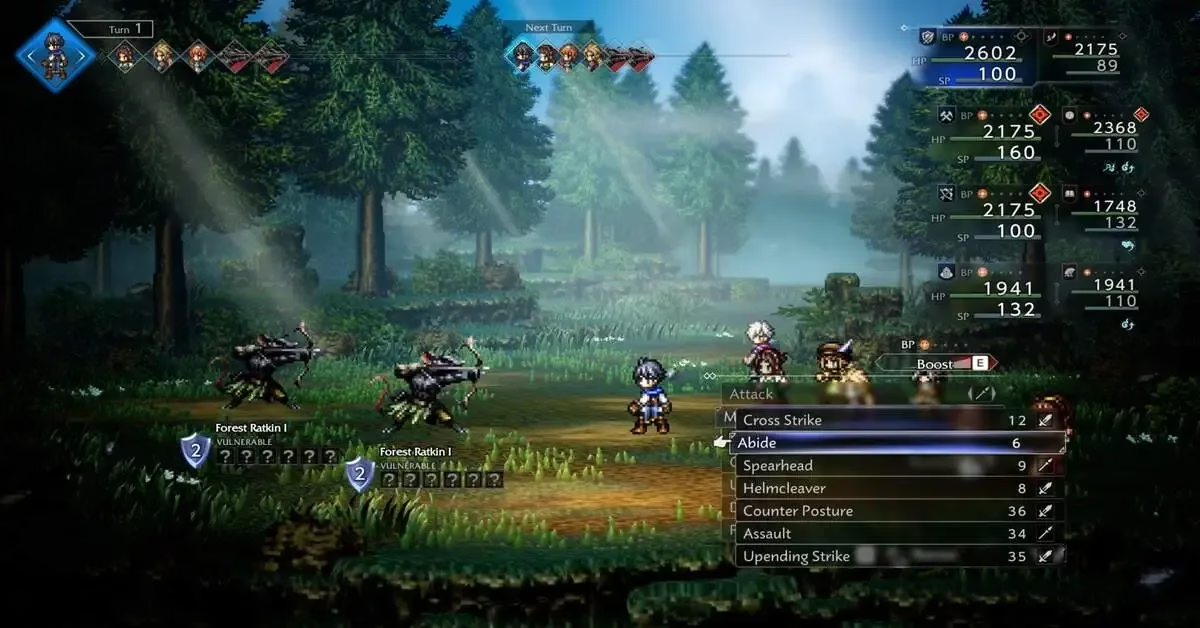
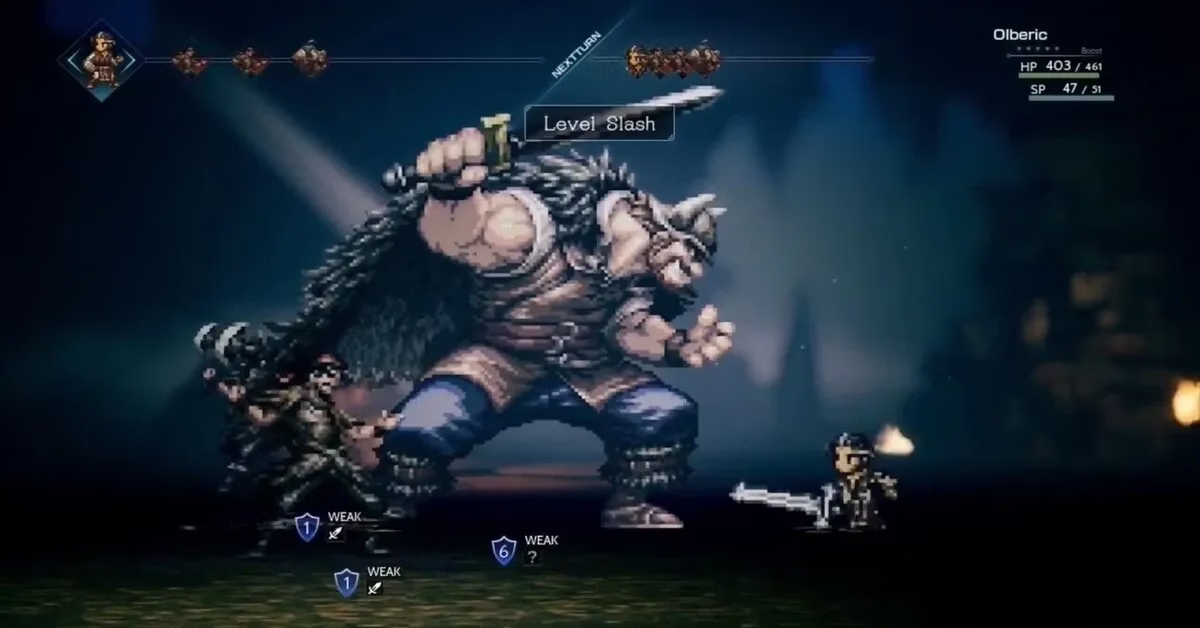
The combat system brought modern tactical depth to classic turn-based battles. At its core was the Break/Boost mechanic—a brilliantly simple yet strategically complex system:
-
Breaking: Every enemy has specific weaknesses (weapons, elements, etc.). Hit these weaknesses to fill their Break gauge. Once broken, they take massive damage for a turn and can't act.
-
Boosting: Each turn generates Boost Points (BP) that you can stack and spend to amplify abilities—think multi-hit attacks or supercharged spells.
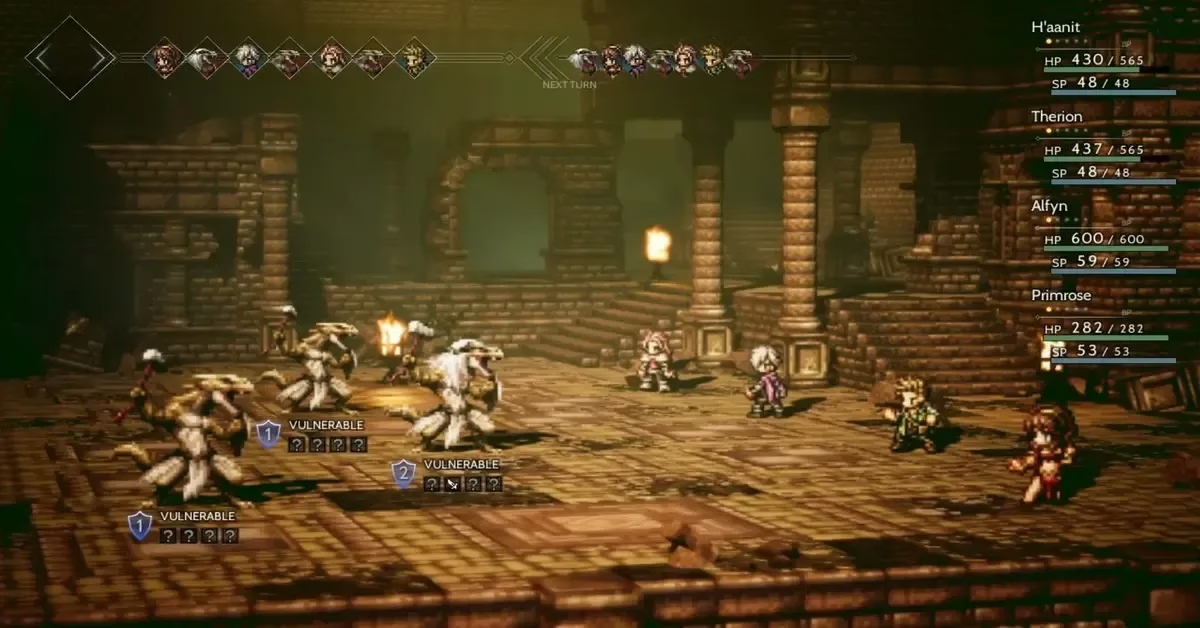
Boss fights became tactical puzzles requiring careful planning of buffs, debuffs, and timing. The job system added another layer—while characters had fixed base classes (Warrior, Scholar, Dancer, Thief, etc.), sub-jobs allowed wild customization. Want a tanky Warrior who can heal? Go for it. A support Dancer slinging offensive magic? Why not! This flexibility kept combat fresh across the entire playthrough.
Octopath Traveler II: The Glow-Up ✨
When Octopath Traveler II launched, it took everything that worked in the original and cranked it up to eleven. Set in the new world of Solistia, the sequel transported players to an era of early industrialization—think steam power, railways, factories, and mechanical contraptions mixing with classic fantasy elements. The setting featured two distinct continents (East and West) with different political climates and cultural identities, plus a major emphasis on seafaring and exploration.
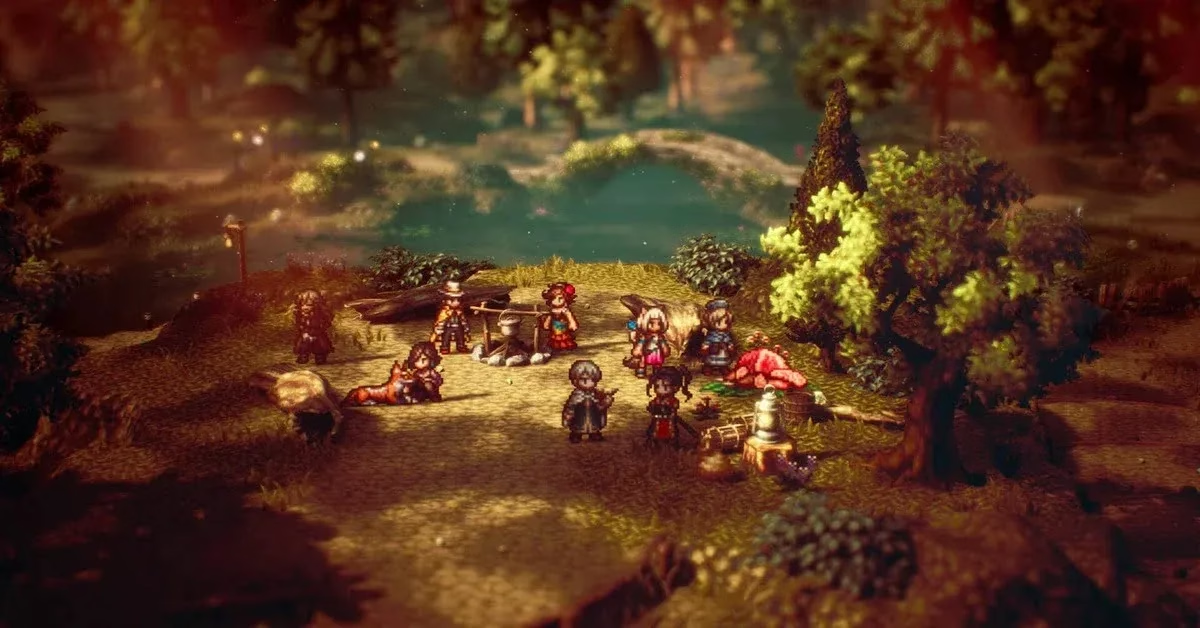
The eight new protagonists felt more interconnected than their predecessors. While maintaining the multi-protagonist structure, the sequel introduced "Crossed Paths"—special duo chapters where specific characters team up, creating meaningful interactions and relationship development. The game also featured a shared finale and overarching threats, making the narrative feel less like eight isolated stories and more like a cohesive saga.
Thematic Depth and Emotional Resonance 💔
Octopath Traveler II didn't shy away from heavy themes—injustice, class conflict, abuse, and social exclusion all featured prominently. However, the game balanced these dark elements with messages of compassion, hope, and redemption. The characters felt more introspective, frequently wrestling with their past decisions and moral dilemmas. This emotional depth elevated the storytelling beyond typical JRPG fare.
Gameplay Refinements 🎯
The core Break/Boost combat returned but with quality-of-life improvements that made battles flow more smoothly:
-
Latent Powers: Character-specific ultimate abilities that charge during combat, adding strategic spice to encounters
-
Day/Night Path Actions: Each character now had TWO Path Actions—one for daytime, one for nighttime—massively expanding world interaction possibilities
-
Enhanced Boss Battles: Multi-phase encounters with shifting weaknesses and cinematic presentation
-
Improved Dungeon Design: More structured layouts with environmental puzzles and varied challenges
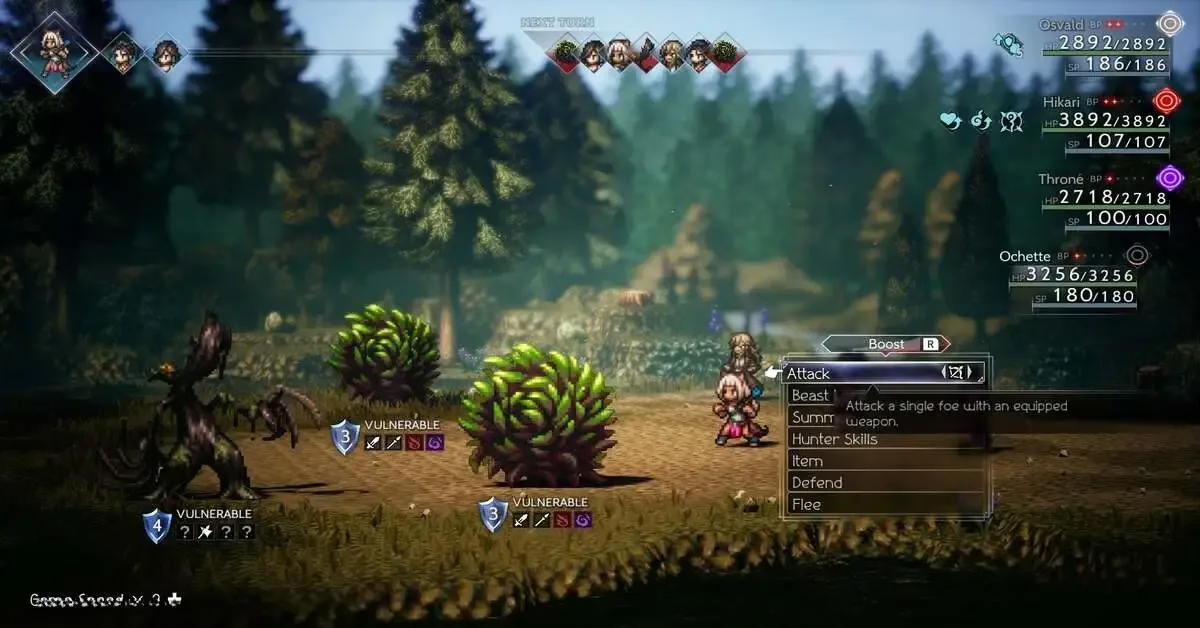
Graphically, the game was absolutely stunning. The HD-2D aesthetic received substantial upgrades—denser environments, sophisticated lighting and shadow work, vibrant color palettes, and dynamic camera angles that made exploration feel cinematic. Cities buzzed with detail, and the soundtrack... chef's kiss... one of the strongest JRPG scores in recent memory. Yasunori Nishiki composed an emotional, diverse, and thematically perfect audio landscape that elevated every moment.
Champions of the Continent: The Mobile Detour 📱
Octopath Traveler: Champions of the Continent took the franchise to mobile devices as a Free-to-Play prequel set a few years before the original game. Returning to Orsterra, this iOS/Android title maintained the signature 2D pixel aesthetic while adapting the gameplay for touchscreens—more compact maps, streamlined menus, and mobile-friendly controls.
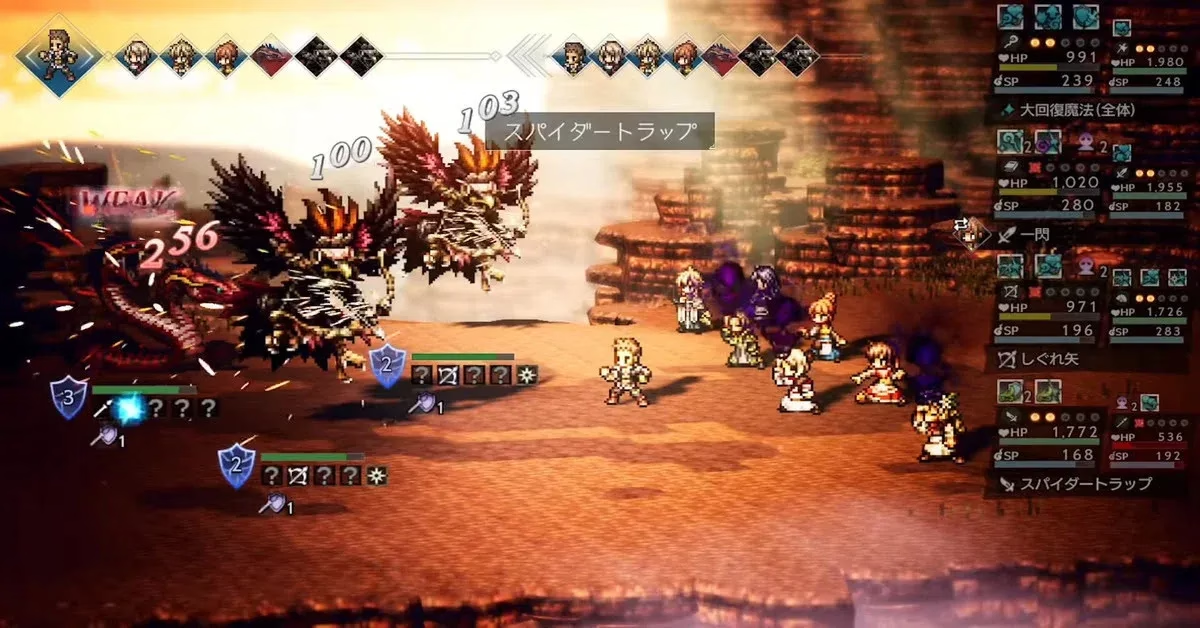
The narrative centered on three antagonists representing Wealth, Power, and Fame—forces that politically and economically dominated the world. Players collected heroes fighting against this corruption through numerous self-contained story arcs that contributed to a larger narrative tapestry.
Unfortunately, being a F2P mobile game meant the dreaded gacha system made an appearance. Characters were unlocked through random pulls with different rarity tiers affecting their strength and abilities. The game featured all the mobile staples: daily events, login bonuses, limited-time challenges, and of course, the option to spend real money for faster progression. While not ideal for purists, it allowed the franchise to reach a broader audience and experiment with different storytelling formats.
Octopath Traveler 0: A Bold New Beginning 🚀
On December 4, 2025, Square Enix dropped Octopath Traveler 0 on Switch, PS4, PS5, Xbox Series X|S, and PC—marking the first multi-platform simultaneous launch for the franchise. This wasn't just another sequel; Square Enix positioned it as a franchise reboot intended to define the series' future direction.
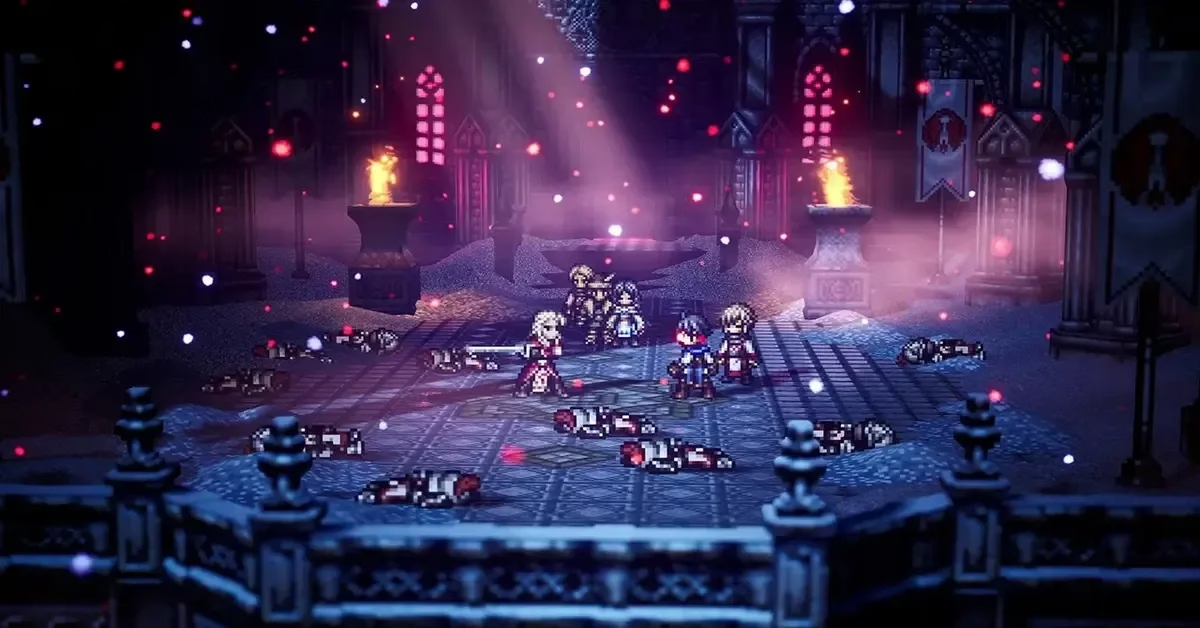
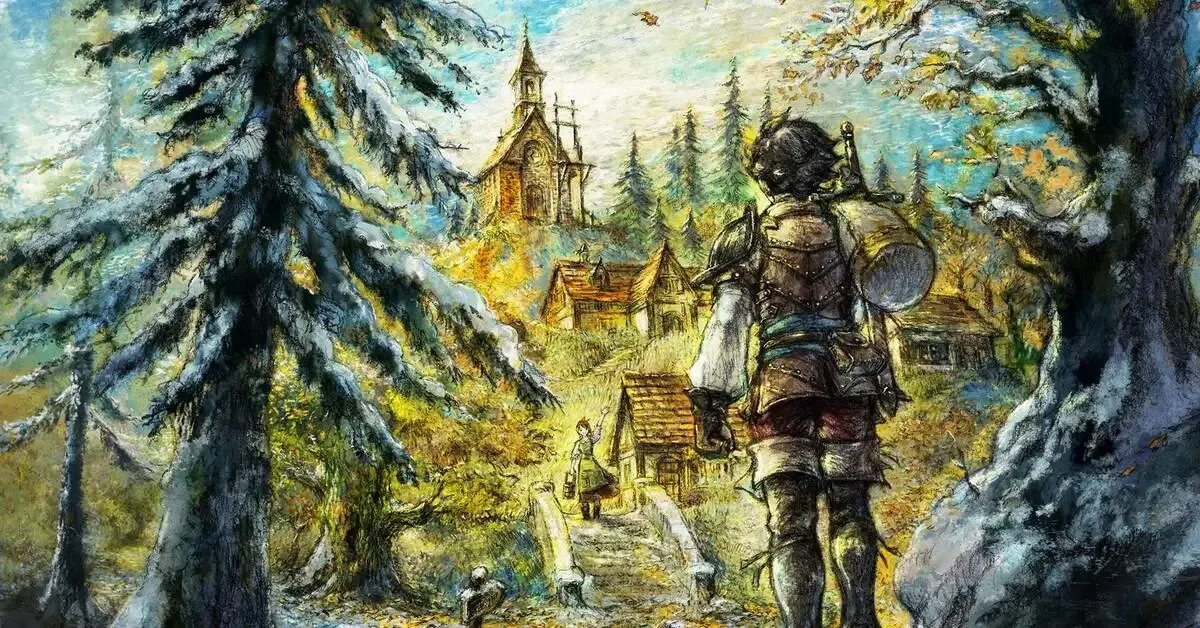
The game made a dramatic departure from the "eight fixed protagonists" formula. Instead, players create their own protagonist, customizing appearance, voice, and more. The story kicks off with your hometown, Wishavale, getting absolutely wrecked, sending you on a "Journey of Restoration" driven by revenge, rebuilding, and justice. The thematic trilogy of Wealth, Power, and Fame from Champions of the Continent returned as central antagonistic forces.
Party of Eight: Tactical Evolution 🎲
While abandoning the eight fixed characters, OT0 maintained the sacred number through party composition—you can now field up to eight characters simultaneously, utilizing front and back row positioning for tactical depth. With over 30 recruitable companions available, each bringing unique skills and roles, the strategic possibilities exploded. The proven Break/Boost system returned with new additions:
-
Ultimate Techniques: Powerful character-specific abilities
-
Support Roles: Specialized support mechanics
-
Enhanced Tactical Options: More granular control over party positioning and abilities
Town Building: Simulation Meets JRPG 🏘️
The standout innovation was Wishavale reconstruction—a full-fledged town-building mechanic woven into the narrative. Players could construct houses, shops, infrastructure, and facilities, each providing different bonuses and gameplay benefits. This wasn't just cosmetic fluff; town development directly influenced:
-
Character bonuses and stat boosts
-
Story progression and quest availability
-
Multiple endings based on your reconstruction choices
This hybrid approach created a fascinating blend of JRPG adventuring and town simulation that gave players agency in shaping both the narrative and mechanical progression.
Gameplay Evolution: From Solo Journeys to Strategic Ensemble 📊
Looking across the franchise, the evolution of core mechanics tells a compelling story of refinement and innovation:
Combat Progression
OT1: Introduced Break/Boost as the tactical foundation
OT2: Added Latent Powers for strategic variety
OT0: Expanded party size to 8 with front/back row positioning
Every installment transformed battles into miniature strategy games where planning, positioning, and resource management determined victory.
Path Action Evolution
OT1: Fixed Path Actions tied to specific character classes
OT2: Dual Path Actions based on day/night cycle
OT0: Context-dependent, flexible interaction systems divorced from preset character limitations
This evolution gradually shifted from rigid role-playing to more player-driven agency while maintaining the core interactive philosophy.
Future Paths: Where Does Octopath Go Next? 🔮
Octopath Traveler 0 represents more than just another entry—it's Square Enix testing new waters while respecting the franchise's DNA. By serving as an accessible entry point for newcomers while reimagining established mechanics, it positions the series for future growth.
Potential directions include:
-
Octopath Traveler III: A traditional sequel combining OT2's interconnected narratives with OT0's expanded party mechanics
-
Spin-off Experiments: Genre-blending titles exploring different gameplay styles (tactics, action-RPG, etc.)
-
Expanded Universe: More prequels or side stories exploring different eras and continents
-
Cross-media Expansion: Anime adaptations, manga, or other media leveraging the rich lore
With a growing fanbase and proven commercial success, the franchise has plenty of runway for expansion without diluting what makes it special.
Why Octopath Never Loses Its Magic ✨
The Octopath Traveler franchise succeeds because it respects both tradition and innovation. It proves that pixel art isn't outdated nostalgia-bait—it's a deliberate aesthetic choice that creates timeless visual appeal. The HD-2D presentation (crisp 2D sprites against gorgeous 3D environments with modern lighting) has become Square Enix's signature style, influencing other titles like Triangle Strategy and Live A Live.
Thematically, these games tackle mature subject matter—abuse, corruption, class struggle, moral ambiguity—without becoming grimdark edgelord territory. They balance darkness with hope, despair with redemption, creating emotionally resonant narratives that stick with players long after credits roll.
The tactical combat remains consistently engaging because the Break/Boost system is simply brilliant game design—easy to understand, difficult to master, endlessly satisfying to optimize. Each new mechanic (Latent Powers, expanded parties, Ultimate Techniques) builds on this foundation rather than replacing it.
Most importantly, the franchise maintains that special sauce that makes JRPGs magical: the journey. Whether you're following eight separate heroes across Orsterra, witnessing interconnected destinies in Solistia, or rebuilding Wishavale from ashes, these games create memorable adventures filled with discovery, growth, and those dopamine-inducing "level up" moments.
The Bottom Line 💯
From 2018's revolutionary debut to 2025's bold reinvention with Octopath Traveler 0, this franchise has proven that classic JRPG design philosophy remains not just relevant but thriving. Each entry expands the formula while preserving the core experience—deeply tactical battles, compelling character-driven narratives, and worlds that feel simultaneously nostalgic and fresh.
Whether you're a day-one veteran who's been vibing with the series since 2018 or a curious newcomer eyeing that fresh OT0 release, the Octopath journey offers something genuinely special. It's a franchise that respects your time, rewards your curiosity, and delivers that pure, uncut JRPG goodness we all crave.
The paths through Orsterra and Solistia have been unforgettable, and with Octopath Traveler 0 opening doors for a new generation, this journey feels like it's only just begun. Now if you'll excuse me, I've got some Breaking and Boosting to do. 🎮✨
