My Epic Journey Through The Witcher 3: Wild Hunt
Holy smokes, folks! Let me tell you about the game that absolutely consumed my life and refused to let go – The Witcher 3: Wild Hunt. I'm not exaggerating when I say this masterpiece didn't just raise the bar for RPGs; it launched that bar into the stratosphere and left it orbiting somewhere near the moon. 🌙
From the moment I booted up this beast of a game, I knew I was in for something special. But nothing – and I mean nothing – could've prepared me for the sheer magnitude of excellence that awaited me in every corner of this breathtaking open world.
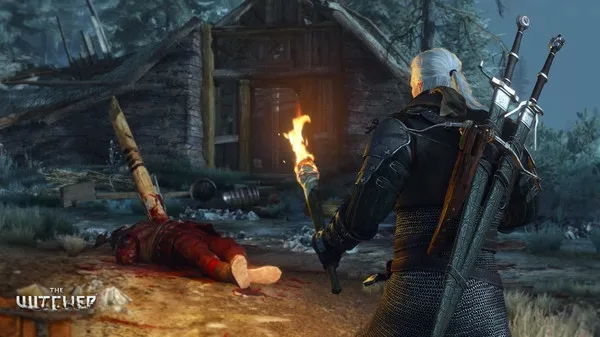
Becoming Geralt: The Monster Slayer I Never Knew I Wanted to Be
Let's get one thing straight – I'm not just some wandering adventurer in this game. Nope! I'm Geralt of Rivia, a professional monster hunter who's been training for this gig since childhood. The game treats witchers like the supernatural pest control experts they are, and honestly? It's pretty darn cool. 😎
What really blew my mind was how the game makes you feel like a highly trained killer. Every swing of my sword feels deliberate, every dodge calculated. I've been mutated to have superhuman abilities – faster reflexes, incredible strength, and senses that would make a bloodhound jealous. The combat system isn't your typical button-mashing affair; it demands tactical thinking and proper preparation.
The Arsenal of Awesome
My weapon collection? Chef's kiss 👨🍳 I'm talking upgradeable steel and silver swords, an entire pharmacy of mutating potions that turn me into an even deadlier force, and combat magic that makes me feel like I'm conducting a symphony of destruction. The variety is insane!
But here's where it gets interesting – the game doesn't just throw you into fights. You actually have to prepare for them. I spend hours researching monsters in my bestiary, brewing the right potions, applying oils to my blades, and planning my approach. It's like being a supernatural detective meets a medieval chemist meets an absolute badass.
The World That Never Stops Surprising Me
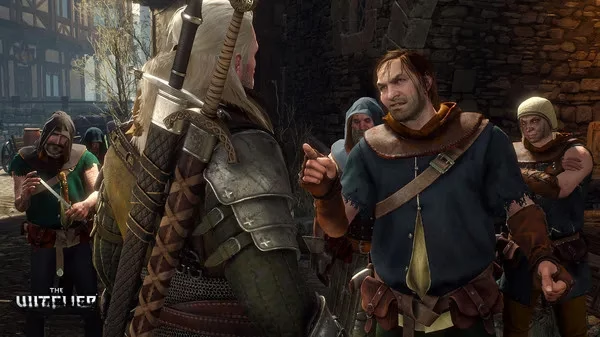
Okay, so I've played my fair share of open-world games, but The Witcher 3? This thing is on another level entirely. We're talking about a world so massive, so detailed, so alive that I sometimes forget I'm playing a game and not living an alternate life.
Exploration Paradise 🗺️
The sheer variety of locations I've discovered is mind-boggling:
-
Forgotten ruins where ancient secrets whisper through crumbling stones
-
Dark, mysterious caves that house treasures (and horrors)
-
Shipwrecks scattered across treacherous seas
-
Bustling cities filled with merchants, dwarven smiths, and shady characters
-
Open plains that stretch as far as the eye can see
-
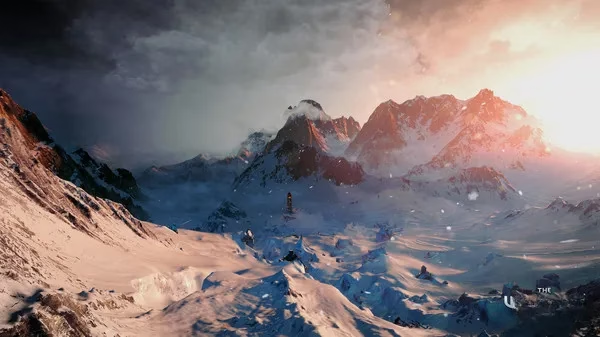
Towering mountains that touch the clouds
-
Dense forests where supernatural predators lurk in the shadows
Every single location feels handcrafted with purpose. I can't just rush through areas because there's always something demanding my attention – a hidden treasure, a desperate villager with a problem, or a monster den that needs clearing.
The Living, Breathing Ecosystem
What really gets me is how the world reacts. The REDengine 3 doesn't just render pretty graphics (though holy hell, those visuals! 😍). It creates a dynamic ecosystem where:
-
Weather systems actually matter and change NPC behavior
-
Day and night cycles affect which monsters appear
-
Citizens follow realistic routines
-
Wildlife behaves naturally
-
The world feels genuinely organic
I remember one time I was tracking a monster during a thunderstorm at night, and the combination of limited visibility, dangerous weather, and the creature's enhanced nocturnal abilities made it one of the most intense gaming experiences of my life.
The Monsters: Beautiful Nightmares
Let's talk about the creatures I've faced because WOW, the creature design is spectacular. We're not dealing with generic fantasy monsters here. Each beast is unique, with its own ecology, behavior patterns, and weaknesses.
My Rogues' Gallery Includes:
| Monster Type | What Makes Them Terrifying | My Survival Strategy |
|---|---|---|
| Griffins | Savage aerial predators | Grounding them with crossbow bolts |
| Wraiths | Supernatural entities | Moon dust and specter oil |
| Werewolves | Cursed transformations | Silver sword and full moon timing |
| Drowners | Aquatic horrors | Stay on dry land when possible! |
| Higher Vampires | Intelligent, powerful | Lots of preparation and prayer 🙏 |
The gargantuan boss fights deserve special mention. These aren't just damage sponges – they're puzzles wrapped in terror. Each boss requires understanding their attack patterns, exploiting specific weaknesses, and sometimes making split-second decisions that determine whether I live or become monster chow.
The Stories That Haunt Me
Here's where The Witcher 3 transcends from "great game" to "absolute masterpiece" – the storytelling. I'm not talking about simple good-versus-evil narratives. This game deals in shades of gray so complex they'd make a philosophy professor weep.
The Main Quest: Chasing Prophecy
My primary mission? Track down the Child of Prophecy – Ciri. She's not just some MacGuffin; she's a living weapon of immense power, foretold by ancient elven legends. Everyone wants her:
-
Treasonous generals seeking power
-
Devious witches with their own agendas
-
Corrupt royalty playing political games
-
Spirits of the wilds protecting ancient secrets
-
The Wild Hunt themselves – otherworldly riders hell-bent on capturing her
The weight of this quest sits heavy on Geralt's shoulders (and mine, honestly). Every decision I make could save or doom this world, and the game never lets me forget it.
The Moral Complexity That Keeps Me Up at Night
This game doesn't do simple morality. There's no obvious "good" or "evil" choice system. Instead, I'm constantly faced with decisions where:
-
Helping one person might doom another
-
Justice and mercy rarely align
-
The "right" choice has terrible consequences
-
Every decision ripples outward in unexpected ways
I saved a village from a monster once, only to discover that monster was protecting them from an even worse threat. The game made me live with that consequence, and honestly? That's what makes it so powerful.
The Side Content That Rivals Most Games' Main Stories
You know how most open-world games have throwaway side quests? Yeah, The Witcher 3 said "nah" to that entire concept. Every single side quest I've encountered has been a miniature masterpiece.
My Favorite Distractions:
The Witcher Contracts 📜
These professional monster-hunting jobs are incredible. Each one involves:
-
Investigating the scene
-
Interviewing witnesses
-
Tracking the creature
-
Preparing for the fight
-
Sometimes making tough choices about the monster's fate
Gwent: My Unexpected Addiction 🃏
What started as a simple card game mini-activity became my full-blown obsession. I've traveled across the continent challenging merchants, nobles, and random NPCs just to collect cards and build the ultimate deck.
Horse Racing and Fist Fighting
Because sometimes a witcher needs to blow off steam in ways that don't involve decapitation!
The Dark Side: Brutality and Beauty
Let me be real with you – this game doesn't pull its punches when showing the brutality of its world. The combat is viscerally violent, with:
-
Decapitated heads rolling across blood-soaked battlefields
-
Gory entrails painting the landscape
-
Dismemberment that's both horrifying and somehow artistically rendered
-
Personal tragedies portrayed in unflinching detail
But here's the thing – it's not gratuitous. Every moment of violence serves the narrative, reminding us that this is a world at war, a world where monsters (both human and supernatural) thrive, and where heroism often comes with a heavy price.
The Technical Marvel
Built exclusively for next-generation hardware (back when I first played it), The Witcher 3 pushed my system to its limits and rewarded me with:
-
Visual fidelity that still holds up years later
-
Performance optimization that runs surprisingly well on modest hardware
-
Rich environmental storytelling in every frame
-
Atmospheric effects that enhance immersion tenfold
System Requirements Breakdown:
Minimum Specs (For the Budget Witchers):
-
OS: 64-bit Windows 7 or 8.1
-
Processor: Intel Core i5-2500K / AMD Phenom II X4 940
-
Memory: 6 GB RAM
-
Graphics: Nvidia GeForce GTX 660 / AMD Radeon HD 7870
-
Storage: 35 GB
Recommended Specs (For the Optimal Experience):
-
OS: 64-bit Windows 7 or 8.1
-
Processor: Intel Core i7 3770 / AMD FX-8350
-
Memory: 8 GB RAM
-
Graphics: Nvidia GeForce GTX 770 / AMD Radeon R9 290
-
Storage: 35 GB
The Economic Reality: Making Smart Purchases
Look, I get it – we all want the best deals on our games. In 2026, there are tons of options for snagging The Witcher 3 at great prices, whether you're buying the base game or the complete edition with all DLCs (which, trust me, you absolutely want).
Shopping Smart Tips:
✅ Compare prices across multiple digital storefronts
✅ Watch for seasonal sales
✅ Check bundle deals that include DLC
✅ Verify region restrictions before purchasing
✅ Consider payment fees in final calculations
✅ Read store reviews and delivery timeframes
⚠️ Important Cautions:
-
Some regions have language/content limitations
-
Always verify edition details (GOTY, Complete, etc.)
-
Check activation requirements
-
Understand refund policies
-
Beware of too-good-to-be-true pricing
Life Between Contracts
What makes Geralt feel real isn't just the monster hunting – it's the downtime. When I'm not saving villages or tracking prophesied children, I'm:
-
Trading with merchants and haggling over prices (those dwarven smiths drive hard bargains!)
-
Upgrading my gear with hard-earned crowns
-
Customizing armor for different combat scenarios
-
Brewing potions in preparation for known threats
-
Engaging in romance (Yennefer or Triss? Still can't decide! 💕)
-
Exploring ruins just because they're there
-
Helping villagers with their everyday problems
These moments of quiet humanity between epic battles make Geralt one of the most compelling protagonists I've ever controlled.
The Verdict: A Decade Later and Still Reigning Supreme
As I write this in 2026, over a decade since The Witcher 3 first launched, I'm struck by its enduring legacy. This isn't just nostalgia talking – the game genuinely holds up in every conceivable way:
What Makes It Timeless:
🏆 Unmatched storytelling that respects player intelligence
🏆 World design that sets industry standards
🏆 Combat depth that rewards skill and preparation
🏆 Character development that feels earned and meaningful
🏆 Moral complexity that challenges simplistic thinking
🏆 Technical achievement that still impresses
🏆 Content volume that provides hundreds of hours of quality gameplay
My Final Thoughts: A Love Letter to CD Projekt Red
I've thrown hundreds of hours into this game across multiple playthroughs, and I'm still discovering new things. Hidden dialogue options I missed. Side quests I somehow overlooked. Alternative solutions to problems I thought I'd solved optimally.
The Witcher 3: Wild Hunt isn't just the best RPG of its generation – it's a benchmark that every open-world game since has been measured against. It proved that massive scope doesn't require sacrificing quality, that player choice can have genuine weight, and that fantasy worlds can be simultaneously beautiful and brutal.
Would I recommend it? That's like asking if I'd recommend breathing! 😤 Whether you're a veteran gamer looking for depth and challenge, or a newcomer wanting to understand what makes RPGs special, The Witcher 3 delivers on every promise and then some.
This world may not always be worth saving, as the game suggests, but damn if it isn't worth experiencing. Every muddy village, every monster-infested forest, every morally gray decision – they all combine to create something truly extraordinary.
Now if you'll excuse me, I have a Gwent tournament to win and a griffin contract that won't complete itself. The Path calls, and I'm more than ready to answer. ⚔️
Toss a coin to your Witcher, indeed.
