God of War Creator's Brutal Takedown of Sons of Sparta
The gaming world erupted when David Jaffe, the legendary creator behind the God of War franchise, unleashed a scathing critique of the newly released Sons of Sparta. After a mere sixty minutes of gameplay, Jaffe didn't just voice disappointment—he delivered a masterclass in creative dissection, questioning the very soul of what made Kratos an icon. His now-infamous question, 'What the f** were they thinking?' has sent shockwaves through both the industry and the fanbase, sparking intense debates about creative vision, franchise integrity, and the evolution of beloved characters.
The Fundamental Disconnect: Rage vs. Relatability 🔥
Jaffe's core argument cuts straight to the heart of Kratos's identity. To him, the Ghost of Sparta was never designed to be someone you'd grab coffee with or relate to on a personal level. Kratos was engineered as a force of nature—a barely contained storm of violence and vengeance, driven by primal rage that bordered on the monstrous. This wasn't a bug in the character design; it was the entire feature.
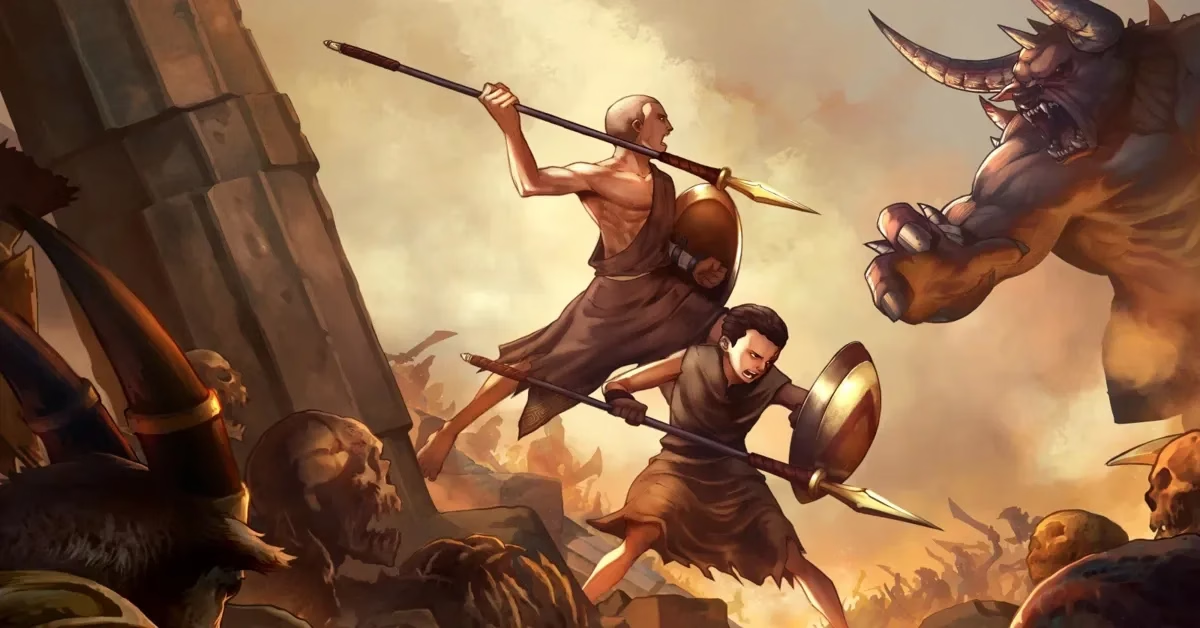
During his livestream breakdown, Jaffe didn't hold back, comparing the new iteration to a "WB Kids TV show" version of the brutal warrior we all know. By centering the narrative around a childhood training arc featuring Kratos and his brother Deimos, Mega Cat Studios has, in Jaffe's view, committed what amounts to creative sacrilege. They've taken the jagged edges—the uncomfortable, raw elements that made God of War a cultural phenomenon—and sanded them down to something safe, something palatable, something... generic.
From Blood-Soaked Rites to Tutorial Hell 💀
Let's talk about that opening. The original God of War threw players directly into the gaping maw of a Hydra, no questions asked, no hand-holding required. It was brutal, immediate, and unforgettable. Sons of Sparta, on the other hand? Jaffe points out that it opts for an extensive tutorial wrapped in Spartan training regalia, complete with dialogue trees and what he calls a "Helpful Guide" pedagogical flow.
Here's the thing: Jaffe's beef isn't with the 2D format itself. The shift from 3D hack-and-slash to 2D Metroidvania could've worked brilliantly. The problem, as he sees it, is the shift in soul. The game prioritizes:
-
Discovery over destruction
-
Emotional growth over visceral power fantasy
-
Narrative depth over kinetic brutality
-
Accessibility over the raw, unapologetic violence that put Santa Monica Studio on the map
The Original Blueprint 📋
| Jaffe's Vision | Sons of Sparta's Approach |
|---|---|
| Monster, not hero | Relatable protagonist |
| Punch-first brutality | Dialogue-heavy exploration |
| Unredeemable force | Disney-fied training arc |
| Doomslayer energy | Standard Hero's Quest |
| Blood-soaked rite of passage | Pedagogical tutorial |
By presenting Kratos and Deimos through what Jaffe calls a "Disney-fied" lens, the developers have essentially neutered what made these characters compelling. Instead of witnessing the dark, tragic origins of a god-slayer—watching a budding killer's uncomfortable emergence—we're served a sanitized protagonist whose journey feels lifted from a generic hero template.
The "Generic Kid Version" Problem 👦
Jaffe's frustration reached its peak when discussing the characterization of the young brothers. His critique zeroes in on a specific creative choice: focusing on a "generic kid version" of Kratos and Deimos. This approach, he argues, strips away the unique DNA that made the franchise special in the first place.
The original God of War series thrived on its willingness to make players uncomfortable. Kratos wasn't a good person. He wasn't even an anti-hero in the traditional sense. He was something darker, more primal—a character study in rage and revenge that refused to apologize for its protagonist's monstrous actions. That's what made it groundbreaking. That's what sparked countless late-night gaming sessions and water cooler debates.
Sons of Sparta, according to Jaffe, trades this uncomfortable brilliance for something that merely looks like God of War while feeling like a complete stranger. It's wearing the IP's skin but lacking its beating heart.
The 2000s vs. 2020s Design Philosophy ⚔️
The clash between Jaffe and Sons of Sparta represents something larger than one creator's disappointment with a spin-off title. It's a fundamental generational divide in game design philosophy:
Action-First Era (2000s)
-
Immediate gratification through violence
-
Minimal narrative interruption
-
Power fantasy as primary appeal
-
Uncomfortable protagonists
-
Edge and grit prioritized
Narrative-First Era (2020s)
-
Story-driven exploration
-
Emotional character development
-
Accessibility and inclusion
-
Relatable heroes with depth
-
Polish and broad appeal
Neither approach is inherently wrong, but when you apply 2020s sensibilities to an IP built on 2000s DNA, you risk creating something that satisfies no one. Core fans feel betrayed by the sanitization, while new players might wonder what all the fuss was about in the first place.
The Warning Shot Heard Round the Industry 🎯
Jaffe's refusal to play beyond the first hour isn't petty—it's symbolic. It's a statement that sometimes, you can tell everything you need to know about a creative direction within those initial moments. When the fundamental vibe, the essential soul of a property has been altered, continuing becomes an exercise in watching something you loved get slowly dismantled.
His critique serves as a stark warning to developers and publishers alike: respect the foundation or risk losing everything. You can't just slap familiar character models onto a completely different gameplay and narrative template, call it part of the franchise, and expect the core audience to embrace it. Well, you can, but then you get situations like this—where the creator himself becomes your harshest critic.
What This Means for the Franchise 🤔
The fallout from Jaffe's takedown raises critical questions about Sons of Sparta's place in the God of War universe:
-
Is it a mainline entry or experimental spin-off? The answer determines expectations.
-
Who is the target audience? New players or established fans?
-
Should every entry maintain the original's edge? Or can the franchise evolve beyond its creator's vision?
-
Does the Metroidvania format inherently conflict with God of War's DNA? Or was it just the execution?
Mega Cat Studios faces the unenviable position of having created a technically competent Metroidvania that happens to wear one of gaming's most iconic faces. They've delivered polish, accessibility, and exploration—all admirable qualities. The problem? They promised Spartan rage and delivered Spartan summer camp.
The Broader Industry Implications 💼
This situation extends far beyond one game. It speaks to the ongoing tension between preservation and evolution in gaming. How much can you change a beloved IP before it becomes something else entirely? At what point does "reimagining" become "misunderstanding"?
Other franchises have navigated this successfully. Metroid Dread honored the series' DNA while pushing it forward. Doom (2016) captured the original's brutal essence in a modern package. Both understood that evolution doesn't mean abandonment—it means carrying the core forward while expanding outward.
Sons of Sparta, in Jaffe's assessment, failed this test. It expanded outward while leaving the core behind.
The Fan Divide 👥
Not everyone agrees with Jaffe's assessment, and that's worth noting. Some players appreciate the more narrative-focused approach, finding depth in the brotherly dynamic and enjoying the Metroidvania exploration. Others argue that franchises should evolve beyond their creators' original visions, that clinging to 2000s-era brutality limits storytelling potential.
These perspectives have merit. Gaming has matured as a medium, and with that maturity comes different storytelling approaches. But Jaffe's counterpoint remains powerful: if you're going to change the fundamental nature of what made something special, why attach it to an existing IP at all? Why not create something new?
Looking Forward: Can This Be Fixed? 🔧
The question now becomes whether Mega Cat Studios will respond to this criticism. DLC? Updates? A more brutal sequel? Or will Sons of Sparta stand as a cautionary tale about the dangers of over-sanitizing beloved properties?
Time will tell, but Jaffe's critique has already accomplished something significant: it's forced an industry-wide conversation about creative integrity, franchise stewardship, and the delicate balance between honoring legacy and pursuing innovation.
The Takeaway 📝
David Jaffe's brutal takedown of God of War: Sons of Sparta isn't just about one disappointed creator—it's about the fundamental question of what makes a franchise itself. Can you strip away the edge, the discomfort, the raw brutality, and still call it God of War? Or have you created something that merely cosplays as the legend?
For Jaffe, the answer is clear: you can't Disney-fy a monster and expect it to still inspire fear. You can't trade punch-first brutality for narrative exploration and claim you're honoring the source. You can't turn a force of nature into a relatable hero without fundamentally breaking what made that character iconic.
Whether you agree with his assessment or not, one thing is undeniable: when a creator looks at their creation's legacy and asks, 'What the f** were they thinking?', it's time for the entire industry to pause and reflect on what we're building, who we're building it for, and whether we're honoring the foundations that made these franchises legendary in the first place.
The Ghost of Sparta deserved better. The question is: will anyone learn the lesson? 👻
